


Airbag Warning Light On? Complete Diagnosis & Fix Guide
Last Updated: March 2026
Reviewed by: L&D Solutions Technical Team – Airbag Module Reset & SRS Repair Specialists
Experience: 10+ Years Resetting SRS Modules & Restoring Airbag Systems Nationwide
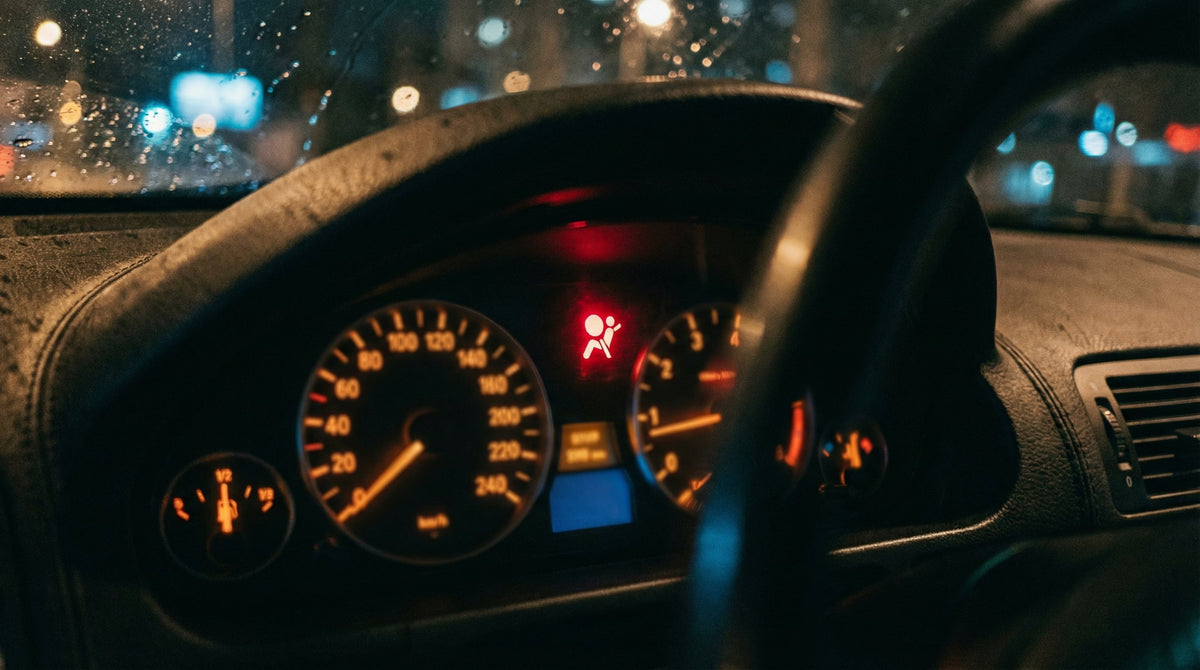
That little glowing icon on your dashboard — the one shaped like a seated figure with a circle in front of it — is one you should never ignore. When the airbag warning light comes on, your Supplemental Restraint System (SRS) is telling you something is wrong, and in a crash, "wrong" can mean the difference between life and serious injury.
This guide explains:
- What the airbag warning light means
- The 8 most common causes
- How to diagnose it step by step
- How to fix it — and what it costs
- When you need a professional
Airbag Light On After an Accident?
Get Professional Airbag Module Reset →What Is the Airbag Warning Light?
The airbag warning light — also called the SRS light (Supplemental Restraint System) — is a built-in safety monitor for your vehicle's entire airbag and seatbelt pretensioner system. It covers:
- Impact sensors throughout the vehicle
- The Airbag Control Module (ACM or SDM)
- Clock spring inside the steering column
- Seat occupancy sensors
- Seatbelt buckle switches
- All SRS wiring and connectors
Every time you start your car, the SRS runs a self-diagnostic test — the light illuminates for 4–7 seconds, then goes out. That's normal. If the airbag light stays on after that, or comes on while driving, a fault has been detected and stored in the Airbag Control Module.
What the Airbag Light Looks Like on Your Dash
The airbag light on the dash typically appears as:
- A seated figure with a circle (inflated airbag) in front — in red or amber
- The text "SRS" or "AIRBAG" in red or amber
- A combination of both
Some vehicles also show a separate "Passenger Airbag Off" light when the seat is empty or has a child seat — that's intentional. But if it stays on with a full-sized adult seated, the occupancy sensor has a fault.
8 Common Causes of the Airbag Light Coming On
1. Faulty or Triggered Crash Sensor
Impact sensors detect sudden deceleration and signal the ACM to deploy airbags. Even a minor fender-bender can trigger a fault code. Always have sensors inspected after any collision, however minor.
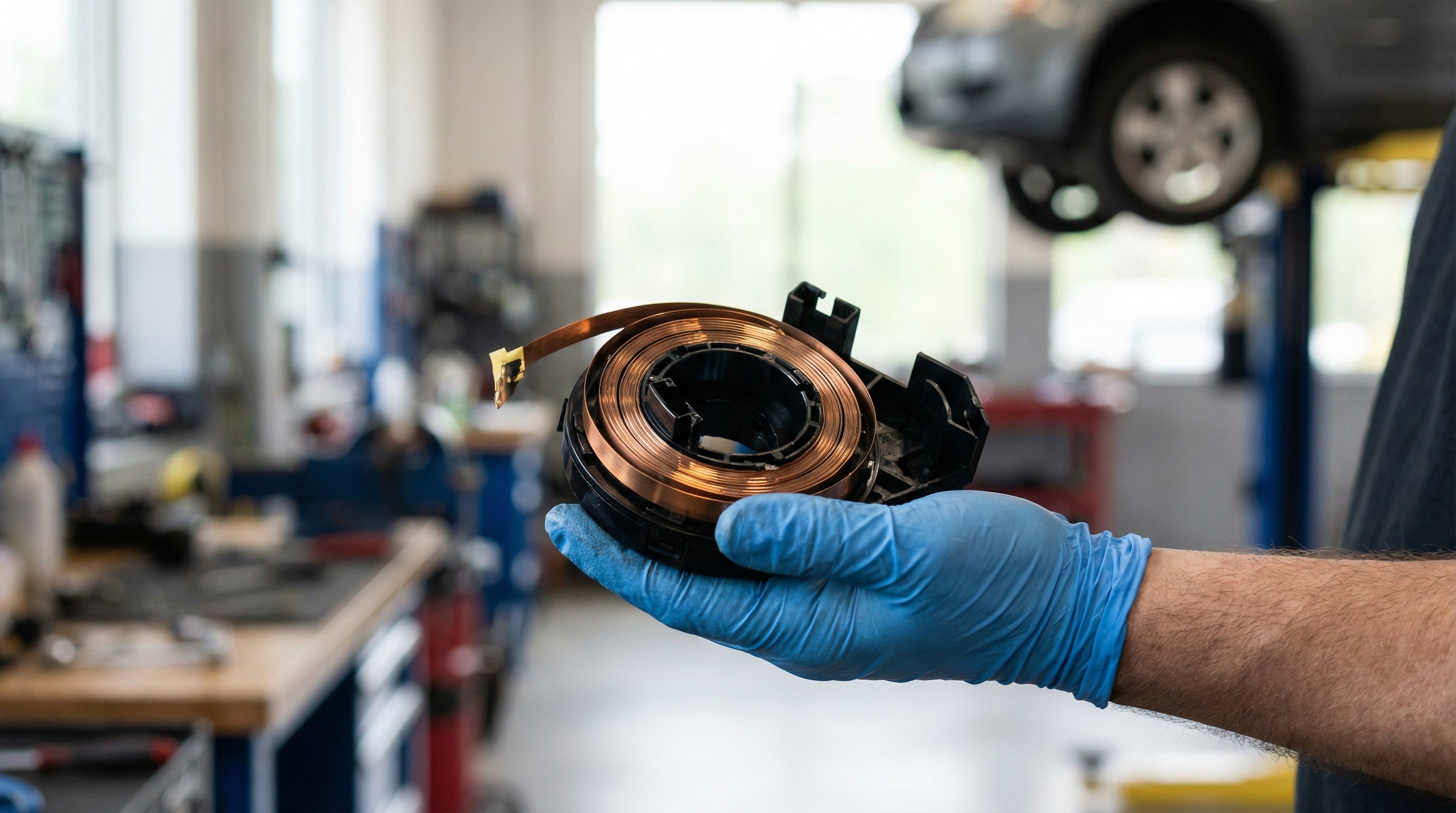
2. Worn or Broken Clock Spring
The clock spring is a coiled ribbon connector inside the steering column hub that maintains the electrical connection to the driver's airbag as the wheel turns. When it fails, the airbag circuit breaks and the light comes on. A non-working horn is a common accompanying symptom.
3. Passenger Seat Occupancy Sensor Failure
A pressure-sensitive mat under the passenger seat tells the ACM whether to arm the airbag. Spilled liquids, heavy bags on the seat, or seat movement tugging the connector can corrupt the sensor — one of the most common and affordable fixes.
4. Drained or Recently Replaced Battery
The SRS backup capacitor can discharge when the battery dies or is disconnected. This can corrupt SRS memory and trigger the warning light even after the battery is restored. Usually fixed with an SRS module reset.
5. Loose, Corroded, or Damaged Wiring
The yellow SRS wiring harness under the seat is vulnerable to pinching by seat rails. Corrosion at connectors is also common in older vehicles or humid climates. The light may appear intermittently based on seat position.
6. Wet or Corroded Airbag Control Module (ACM)
The ACM is often mounted low in the vehicle. Flood water, spilled drinks, or car wash ingress can damage it. A water-damaged ACM typically stores multiple fault codes and will need to be rebuilt or replaced.
7. Previously Deployed Airbags (Post-Accident)
If airbags deployed in a prior accident, all modules, sensors, pretensioners, and potentially the ACM must be replaced and the system reset. Without this, the airbag light stays on permanently and no airbags will deploy in a future crash.
8. Aftermarket Accessories or Improper Repairs
Aftermarket steering wheels, non-OEM seat covers with heating elements, or improper upholstery work can interfere with SRS components and trigger the warning light.
Step-by-Step Diagnosis Guide
Step 1: Observe the Light's Behaviour
Does it stay on solid from startup? Come on while driving? Blink in a pattern? Older vehicles (pre-2000) use blink codes to communicate faults. Record your observations before going to a shop.
Step 2: Scan with an SRS-Capable Tool
SRS faults are stored as B-codes in the Airbag Control Module — a separate system from the engine ECU. Use: Autel MaxiCheck, Launch, BlueDriver, Innova 6100P, or a dealership tool. Connect with ignition OFF, turn to ON (don't start), and read all stored and pending codes.
Step 3: Document All Fault Codes
Write down every code before clearing anything. Some codes point directly to a failed part; others indicate intermittent wiring issues requiring further inspection.
Step 4: Perform a Visual Inspection
Disconnect the battery and wait 15–30 minutes for the backup capacitor to discharge before touching anything. Then check:
- Under-seat yellow/orange connectors and harness along seat rails
- Steering column for clock spring wear
- Front bumper area for damaged impact sensors
- ACM location for water damage
Step 5: Test Suspect Components
Use a multimeter to check resistance and continuity. Test the clock spring while turning the wheel lock-to-lock. Verify seat sensor resistance against spec.
Step 6: Repair, Clear Codes & Re-scan
After the repair, clear SRS codes and cycle the ignition. The light should do its 4–7 second self-test then go out. Re-scan to confirm zero stored codes.
Common SRS Fault Codes
| Code | Description | Most Likely Cause |
|---|---|---|
| B0001 | Driver Frontal Stage 1 | Driver airbag circuit / clock spring failure |
| B0010 | Passenger Frontal Stage 1 | Passenger airbag circuit / wiring fault |
| B0082 | Passenger Presence System | Seat occupancy sensor failure |
| B0085 | Right Front Impact Sensor | Right crash sensor damage or wiring fault |
| B0087 | Left Front Impact Sensor | Left crash sensor damage or wiring fault |
| B1000 | Electronic Crash Sensor – Front | Front center sensor or ACM internal fault |
| B1001 / B1002 | Restraint System Config Mismatch | ACM doesn't match vehicle — common after module swap |
Note: Code definitions vary by manufacturer. Always cross-reference with your make, model, and year service manual.
How to Fix the Airbag Warning Light
Fix 1: Replace the Clock Spring
Common on vehicles over 80,000–100,000 miles. The old unit is removed from the steering column hub and replaced. SRS codes must be cleared and the system retested after installation. Parts: $30–$150 · Labour: $80–$250.
Fix 2: Replace or Repair the Passenger Seat Sensor
The occupancy mat can sometimes be replaced independently of the full seat assembly. Some sensors can be recalibrated without full replacement. Total: $150–$400.
Fix 3: Repair Wiring and Connectors
Pinched harnesses under the seat rail are spliced or replaced. Corroded connectors are cleaned or swapped. Labour-intensive but low parts cost. Total: $100–$300.
Fix 4: Replace Impact / Crash Sensors
Straightforward bolt-on replacements once the bumper or panel is removed. Codes cleared and system re-scanned after. $30–$120 per sensor plus labour.
Fix 5: Airbag Module Reset or ACM Replacement
A new OEM ACM from a dealership runs $400–$1,200+. An alternative is a professional airbag module reset — L&D Solutions can restore a corrupted or post-crash ACM to factory condition for a fraction of the replacement cost. Reset: $50–$300.
Fix 6: Post-Accident SRS Restoration
All deployed modules, pretensioners, and sensors must be replaced. L&D Solutions offers full SRS repair services covering post-accident restoration and system re-initialization. Never drive a vehicle with deployed airbags that haven't been properly replaced.
Fix 7: Battery Reset & SRS Re-initialization
If a battery swap caused the light, clearing the SRS codes with a capable scanner is often the fix — after confirming no underlying fault. L&D Solutions' airbag module reset service can re-initialize the ACM without replacing it.
Repair Cost Breakdown
| Repair | Parts | Labour | Total |
|---|---|---|---|
| SRS diagnostic scan | — | $100–$250 | $100–$250 |
| Clock spring replacement | $30–$150 | $80–$250 | $110–$400 |
| Passenger seat sensor | $80–$250 | $80–$150 | $160–$400 |
| Wiring / harness repair | $20–$80 | $80–$250 | $100–$330 |
| Impact sensor (each) | $30–$120 | $60–$200 | $90–$320 |
| ACM replacement (OEM) | $400–$1,200 | $80–$200 | $480–$1,400 |
| ACM reset (specialist) | — | $50–$300 | $50–$300 |
| Full post-accident SRS restoration | $800–$3,500+ | $300–$800+ | $1,100–$4,300+ |
DIY vs. Professional Repair
What You Can Do Yourself
- Reading SRS codes with a compatible scan tool
- Visual inspection under the seat (battery disconnected first)
- Checking for open recalls at NHTSA.gov
What Must Be Left to a Professional
- Any repair to an airbag module, inflator, or pretensioner
- Clock spring replacement (risk of accidental deployment)
- ACM replacement, programming, or airbag module reset
- Post-accident SRS restoration and repair
- Clearing and verifying SRS codes after repair
How to Reset the Airbag Light
The airbag light can only be properly reset after the underlying fault is corrected:
- Identify and repair the root cause
- Connect SRS-capable scan tool, ignition ON (engine off)
- Navigate to SRS / Airbag Control Module
- Select "Clear Codes" or "Erase DTCs"
- Turn ignition OFF, wait 30 seconds, then back ON
- Light should illuminate 4–7 seconds then go out
- Re-scan to confirm zero stored codes
Can disconnecting the battery reset the airbag light? No — not reliably. The SRS module has its own memory and backup power. The fault will return within one or two ignition cycles.
Frequently Asked Questions
Is it safe to drive with the airbag light on?
Technically yes, but it is not safe. Your airbags may not deploy in a collision, and some faults risk accidental deployment. Have it diagnosed as soon as possible.
Why did the airbag light come on after I replaced my battery?
Disconnecting the battery discharges the SRS backup capacitor and can corrupt module memory. If the light persists, L&D Solutions' airbag module reset service can re-initialize the ACM without replacing it.
Can a minor fender-bender cause the airbag light to come on?
Yes. Even a low-speed impact under 10 mph can trigger a crash sensor and store a fault code without deploying the airbags. The sensor must be inspected and cleared after any collision.
What if there is a recall on my vehicle's airbag system?
Check your VIN at NHTSA.gov. Recall repairs are free at your dealership. The Takata airbag recall affected over 67 million US vehicles and is still being resolved on some models.
Can I use a regular OBD-II reader to diagnose the airbag light?
Usually no. Basic OBD-II readers only access the engine/transmission module. SRS codes require an enhanced tool with B-code support — such as the BlueDriver, Innova 6100P, or a professional scan tool.
How long does it take to fix?
A wiring connector repair or code clear can take an hour. Clock spring replacement is 1–3 hours. A full post-accident SRS restoration can take a full day or more.
Why does my airbag light blink instead of staying solid?
Older vehicles (pre-2000) use blink codes to communicate faults. Count the blinks per sequence and cross-reference with your vehicle's service manual to identify the specific fault.
My passenger airbag "off" light is on with an adult seated. Normal?
No. If a full-sized adult is seated and the light stays on, the occupancy sensor isn't detecting them correctly. Common causes: faulty pressure mat, loose harness connector, or debris under the seat. Have it diagnosed promptly.
Final Thoughts
The airbag warning light is one of the most safety-critical indicators on your dashboard. Unlike a tire pressure or oil reminder, an SRS fault demands immediate attention. The causes range from a simple wiring connector to a failed control module — and only a proper SRS scan can tell you which one you're dealing with.
If you see the airbag light on your dash, don't ignore it, don't blindly clear it, and don't attempt SRS repairs without the right tools and training. Browse L&D Solutions' full range of SRS repair services to find the right fix for your situation.
Need a Professional Airbag Diagnosis?
Contact L&D Solutions Today →


Leave a comment
This site is protected by hCaptcha and the hCaptcha Privacy Policy and Terms of Service apply.